AI for FinTech
Reduce manual work and speed up financial operations with AI-powered expense tracking, document processing, customer support, and workflow automation. Stubbs integrates AI into financial products, drawing on experience with payment systems, digital wallets, financial APIs, and KYC/KYB workflows.
Our FinTech portfolio includes Myntkaup, a crypto exchange with 20k+ users that reached #1 in the Finance category on Iceland's App Store.
Our AI for FinTech Development Services
AI Integration for FinTech
Adding AI features to existing financial apps (model API integration, backend development, connections to financial data).
AI Agent Development
Developing agents that can pull financial data, work with external APIs and help with multi-step financial application tasks.
AI Chatbot Development
Building AI assistants for customer support, onboarding, account related queries and our internal financial knowledge bases.
AI Workflow Automation
Automating document reviews, data entry, request classification and all the other repetitive tasks in financial operations.
Financial Document Processing
Using OCR and AI to extract data from receipts, invoices, financial statements and verification documents.
RAG & Financial Knowledge Systems
Connecting AI assistants to financial documentation, internal policies and business data so that they can provide answers which are based on the relevant source material.
AI Consulting & Integration Planning
Reviewing your financial product, the data you have and your business requirements in order to identify the AI features that are useful and then plan how to implement them.
AI Testing & Maintenance
Testing the AI output, maintaining the model integrations, monitoring API usage and keeping the AI features updated as the requirements change.
Our FinTech Projects

Crypto Portfolio Tracking App Development
A cryptocurrency trading platform that allows users in Iceland to securely trade and manage digital assets.
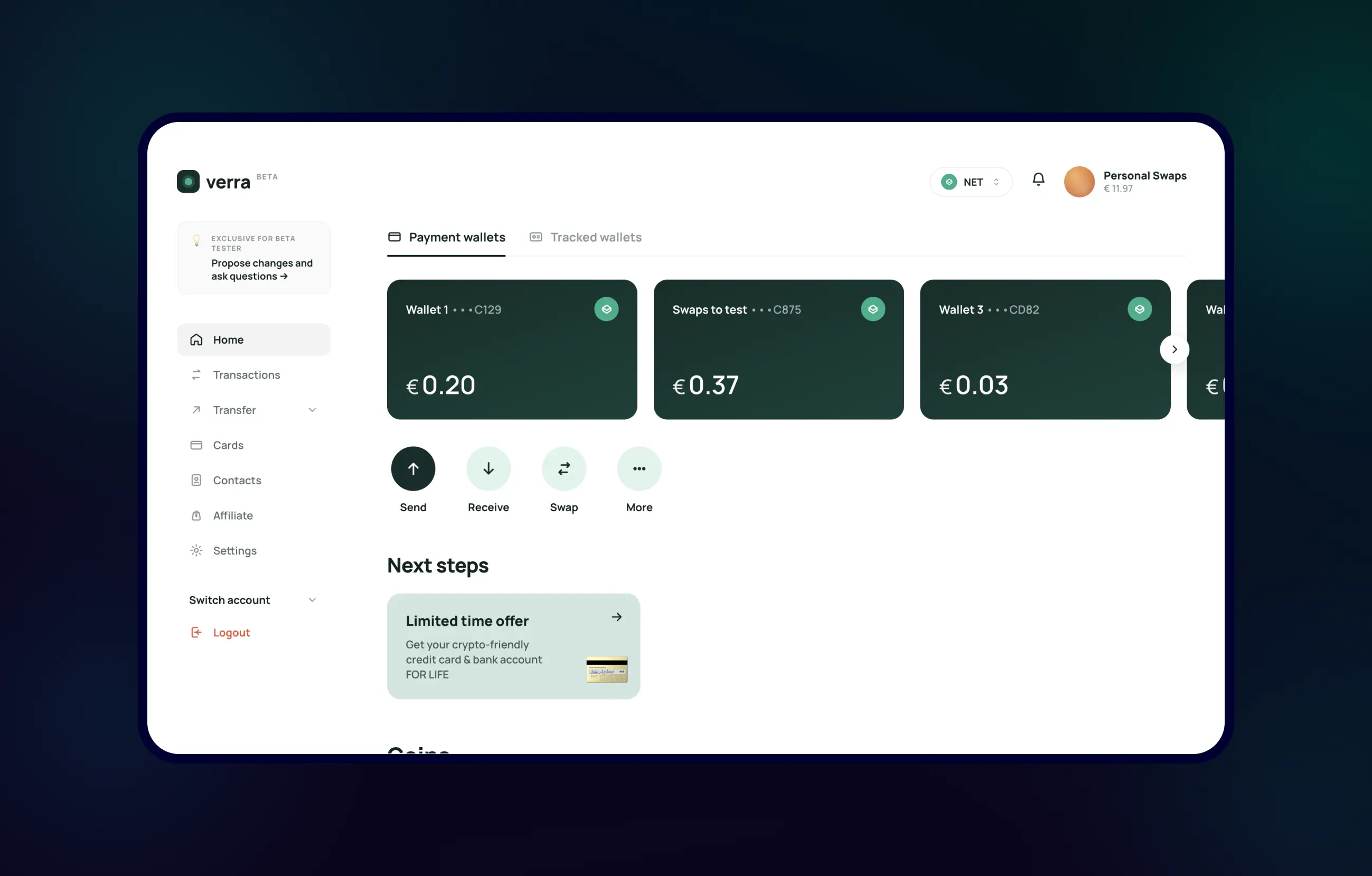
Asset Management Platform Development
A digital asset platform for managing funds and spending crypto through virtual and physical cards across personal and corporate accounts.
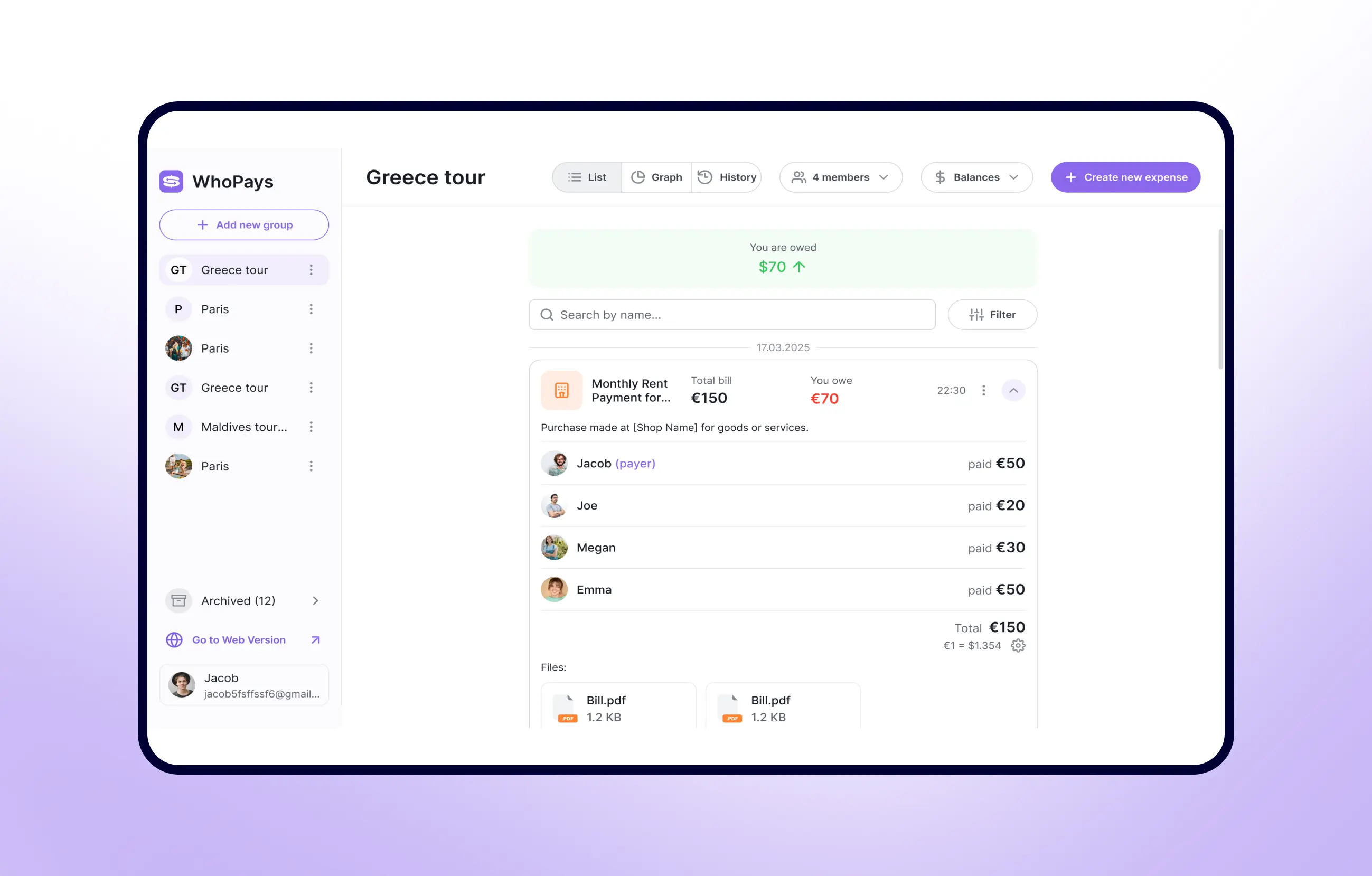
Personal Finance App Development
A personal finance app that helps groups split expenses, track balances, and settle payments without manual calculations.

AI-Powered Car Shopping Website Development
An AI-powered platform that helps users find the best car deals through automatically generated reviews, comparisons, and rankings.
AI Solutions for Financial Applications
Expense & Transaction Categorization
AI can identify expense categories, pull the detail from the receipt and organize the transaction data. The user spends less time manually entering their financial data and the app continues to perform its existing calculation and balance management.
KYC/KYB Document Processing
AI can extract information from identity documents, company records and application forms to pre-populate the data for verification. That data can then be passed off to a established KYC/KYB provider or be reviewed by a compliance specialist.
AI-Powered Financial Assistants
AI assistants can be used to help users find transaction information, understand account features and navigate financial products. Internal assistants can also search financial documentation and answer questions based on approved sources.
Payment Operations Automation
Payment teams are constantly dealing with failed transactions, provider responses, reconciliation records and support requests. AI can be used to categorise the issues, summarize the transaction history and provide the information needed to go further.
Financial Reporting & Data Analysis
AI can be used to help organize financial data, to summarize reports and to explain the information that's already in the application. All calculations and financial figures should be derived from actual data sources rather than being generated by the AI.
Fraud & Risk Review Support
AI can assist with reviewing alerts, organizing case information, and summarizing of unusual transaction activity. Any more sophisticated fraud detection and risk scoring will require appropriate historical data, appropriate models and further validation.
AI can help with many of the smaller tasks that make financial applications so time-consuming to use and to maintain. The most useful features will be ones that work with information that the product already has in its database (i.e. the receipts, the transaction history, the customer documents, the support requests etc).
AI for Different FinTech Products
Digital Banking & Payment Applications
AI for customer service, financial document processing, transaction categorisation and internal payment processing. The integrations can work in parallel with existing banking APIs and payment providers.
Digital Wallets & Personal Finance Apps
AI powered expense tracking, receipt scanning, financial information search and voice interaction. All of this can be used to make it easier for the user to manage their financial information without in any way changing the transaction logic.
Crypto & Digital Asset Platforms
AI assistants for platform documentation, transaction information, support requests and internal operations. We can connect AI functionality to existing backend systems and blockchain data services.
Financial SaaS Platforms
AI features for accounting, expense management, financial reporting, document processing and admin workflows. Can be added to an existing SaaS or part of a new app.
Integrating AI with Existing FinTech Systems
Financial APIs & Third-Party Services
Our engineers have got plenty of experience with payment providers, banking APIs, Fireblocks, Sumsub and the various other financial services. We can absolutely connect the AI features to the relevant application data via the existing APIs and backend.
Data Access & Permissions
AI assistants and automated workflows should only have access to information that is available to the relevant user or process. Access controls and data handling rules are in place as per the requirements of the application.
Validation & Human Review
AI generated information may be incomplete or inaccurate. Financial calculations, execution of transactions and any other sensitive decisions would require separate validation. Approval stages can be added where it's necessary for an employee to review.
Our AI for FinTech Development Process
1. Requirements & Data Review
We look at your financial application, your existing systems, the data you have available and the functionality you're looking to introduce. We also look at the access restrictions and the processes that will require additional controls.
2. Technical Planning
Our engineers pick the integration approach, define the development scope and work out how the AI feature will talk to the existing services. For the use cases where it's not entirely clear what we're going to do, we can start with a PoC.
3. Development & Testing
We develop the AI functionality, integrate the relevant APIs and implement the required backend and frontend features. Testing covers application behavior, AI quality of output, permissions and failed requests.
4. Deployment & Support
Once it's released we can then maintain the integration, look at the errors, review how the model is being used and of course improve the feature based on the real world results.
Why Choose Stubbs for AI in FinTech?

1
Experience with Financial Integrations
We've worked with payment systems, banking APIs, digital wallets, crypto services and KYC/KYB providers. Our engineers are very much aware of how these systems interconnect and exchange data.
2
Full-Stack Development Expertise
Our team uses React, Next.js, Node.js, and TypeScript to develop AI functionality alongside the web and mobile applications where it’s used.
3
FinTech & Web3 Background
Our portfolio is made up of crypto exchanges, digital asset platforms, personal finance apps and products with fairly complex transaction flows.
4
100+ Projects Delivered
Stubbs have been in software development since 2019, employing a team of over 20 mid and senior level specialists.
5
Flexible Cooperation Models
We can build a specific AI capability, take on a larger project or provide engineers to work with your existing team.
Frequently Asked Questions
1. How is AI used in FinTech?
How is AI used in FinTech?
AI is used in a number of financial applications including expense categorisation, document processing, customer support, transaction analysis and internal workflow automation. A good example would be an expense management app which uses AI to pull the amount and category from a receipt. A financial platform might have an AI assistant which can search through its own documentation. The best use case really depends on the product and the information that's already available.
2. What AI features can be added to an existing FinTech application?
What AI features can be added to an existing FinTech application?
You can add in AI chatbots, document scanners, financial data search, transaction categorisation and automated reporting without the need to rebuild the entire application. At Stubbs we'll look at the existing backend, databases and APIs prior to any integration work. Some of the features can be added via a separate service and some will require changes to the existing app functionality.
3. How much does AI development for FinTech cost?
How much does AI development for FinTech cost?
The cost will vary depending on the AI feature, the application architecture, the data requirements and the integrations. At Stubbs a fairly focused AI PoC is typically in the 3k-10k range, AI chatbots are generally in the 10k-30k range. More complex financial AI systems will require an individual estimate (especially where sensitive data is involved, multiple providers are involved or there is a need for advanced validation). Model API usage and hosting are charged separately.
4. How long does it take to integrate AI into a FinTech application?
How long does it take to integrate AI into a FinTech application?
A focused PoC might take a couple of weeks. Integrating AI into a production financial app generally takes longer, especially if the feature requires access to transaction data, external providers or customer records. The timescale will also be dictated by the testing and security requirements. We'll look at the existing architecture and the development scope prior to putting together an estimate.
5. Can AI help with KYC and AML processes?
Can AI help with KYC and AML processes?
Yes. AI can be used to assist with document extraction, request classification, information retrieval and the preparation of cases for compliance review. For instance it can be used to collate information from company docs prior to that information being checked through a KYC/KYB provider. AI does not in any way replace the need for due diligence, AML controls or compliance decisions. Those processes still require appropriate rules, validation and oversight.
6. Can AI detect fraudulent transactions?
Can AI detect fraudulent transactions?
ML can be used to spot unusual transaction patterns and to support fraud detection, though of course you need historical data, you need to evaluate it properly and you need to monitor it. It can also be used to help with alert summaries and investigation workflows on existing financial platforms. The amount of automation you introduce will obviously depend on the level of risk involved, particularly where a decision could be to block a payment or to impact a customer account.
7. Can AI be integrated with banking and payment APIs?
Can AI be integrated with banking and payment APIs?
Yes. AI features can work with financial data that's been pulled in via existing banking and payment integrations, as long as the app has the appropriate access. So an internal assistant could pull the transaction status and produce a summary for a support rep. Our FinTech pedigree is in the integration space with payment providers, banking APIs and digital assets so that's relevant when you're looking at adding AI to those systems.
8. Is AI secure for financial applications?
Is AI secure for financial applications?
AI can be used with financial data, but security is entirely dependent on the implementation. Access permissions, secure API communication, how the data is handled and the security policies of the external AI provider are all factors. We do separate AI suggestions from any operations that would actually impact financial records or transactions. Sensitive actions may require an extra layer of validation and human approval prior to any change being applied.
9. What compliance requirements should FinTech AI applications consider?
What compliance requirements should FinTech AI applications consider?
Requirements will vary depending on the product, the data it processes and the jurisdictions in which it operates. These may include GDPR, KYC/AML obligations, PCI DSS and the relevant controls from ISO 27001 or SOC 2. AI specific risk management and transparency requirements may also be in play. Stubbs can implement the technical controls within the agreed scope, with the interpretation of the regulation and the formal compliance assessment being the responsibility of the appropriate specialist.
10. Do we need to train a custom AI model for a FinTech application?
Do we need to train a custom AI model for a FinTech application?
Not in any way necessarily. A lot of the financial AI capabilities can be built on top of existing models via API. That's particularly true of the document processing, customer support, summarisation and knowledge search type of features. You may well need to build a custom model for some of the more specialist analytical work (e.g. a particular fraud detection or risk assessment system). We'll go through the requirements and see whether an existing model will deliver an acceptable result.
11. How do you test AI features that process financial information?
How do you test AI features that process financial information?
We test the AI's results against representative inputs and expected outputs. For document extraction we're looking at the accuracy of amounts, dates, currencies and the like. We also test for missing information, incorrect inputs, API failures and permission issues. Financial calculations and transactional operations require validation via application logic rather than just the model output.
12. Can AI agents automate financial operations?
Can AI agents automate financial operations?
AI agents can be used to support the delivery of financial operations in a number of ways: pulling information, reviewing documents, producing reports and engaging with approved tools. Some of the lower risk activities can be run automatically, whereas any activity that involves a payment, an account change or a sensitive record will generally require a higher level of control. We define the actions that the agent can take and where approval is required prior to the workflow being implemented.
13. Can AI be added to an existing digital wallet or crypto platform?
Can AI be added to an existing digital wallet or crypto platform?
Yes. An existing wallet or crypto platform can be extended with AI assistants, document processing, support automation and transaction info search. That can be done via the existing backend APIs and data services without any need to replace the core platform. Our experience with crypto exchanges, digital wallets and custody integrations means we know what the systems need in order for those features to work.
14. Do you provide ongoing support for FinTech AI applications?
Do you provide ongoing support for FinTech AI applications?
Yes we can do post launch AI integrations (maintain the integration, update the model APIs, improve the quality of the output, fix any technical issues that arise, add new functionality etc). Support can also include monitoring of usage costs and reviewing of any recurring errors. Financial products in particular may require some additional testing when the connected provider or the application rules change so the maintenance will need to take into account both the existing system and the AI feature.
We would love to help.
What are you interested in:
Name
Tell us about your project and goals
0/1000
Add your file
