AI MVP Development Services
Our AI MVP Development Services
MVP Planning & Scope
Defining the essential features, the user flows and the technical requirements for our first release. AI tools help us to structure the requirements and prepare the dev tasks.
Rapid MVP Prototyping
Creating wireframes, interface concepts, and interactive prototypes to test the product’s main user flows before development.
AI-Assisted Web Development
Building web MVPs with React, Next.js and TypeScript. The AI can generate the components and repetitive code, while developers handle business logic and the integrations.
AI-Assisted Mobile Development
Developing cross platform MVPs using React Native and Expo, with AI tools to help with the coding, debugging and testing.
Backend & API Development
Build APIs, databases, auth, payments and 3rd party integrations. AI will assist with the implementation, with the engineers reviewing the code and the application logic.
MVP Testing & Code Review
Using AI to generate test cases, to identify issues and to assist with debugging. Our developers and QA engineers check the functionality prior to release.
MVP Launch & Further Development
Deploying your MVP, fixing issues, and improving the product based on the early feedback. We can then go on to do further development once the initial release has happened.
Projects Delivered by Our Team
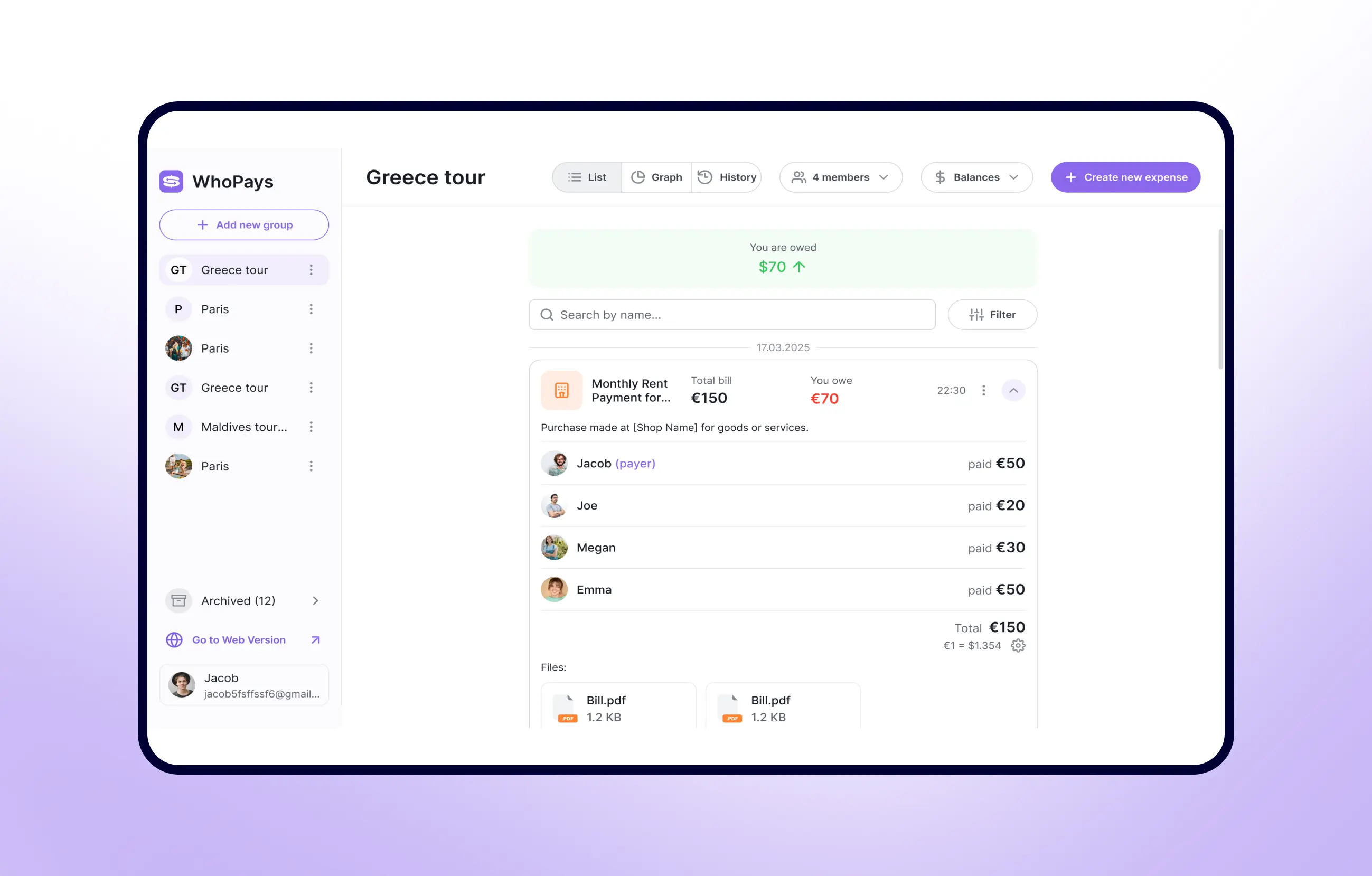
Personal Finance App Development
A personal finance app that helps groups split expenses, track balances, and settle payments without manual calculations.
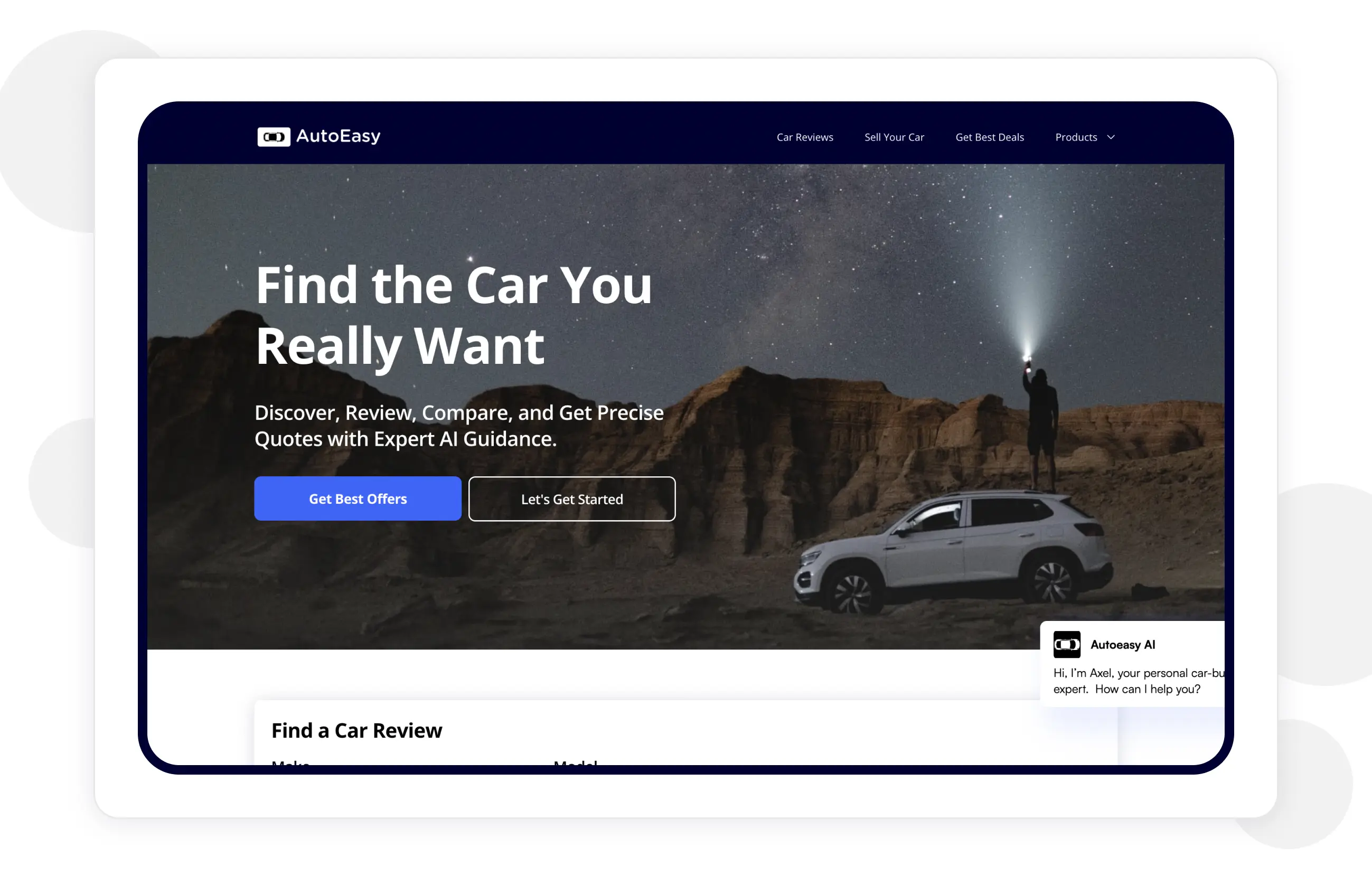
AI-Powered Car Shopping Website Development
An AI-powered platform that helps users find the best car deals through automatically generated reviews, comparisons, and rankings.
What Can You Build with AI-Assisted MVP Development?
SaaS MVPs
Subscription platforms, business dashboards, CRM's and the like (SaaS products with user accounts, billing, permissions and integrations).
Marketplace MVPs
B2B and B2C marketplaces with listings, search, booking or ordering functionality, payments and distinct user roles.
Mobile App MVPs
Cross platform apps for iOS and Android (user accounts, notifications, payments, backend integrations etc.)
FinTech MVPs
Financial dashboards, expense management tools, digital wallets and payment apps with the core functionality required for initial testing.
E-commerce MVPs
Online stores with product catalogs, checkout, customer accounts, order management and payment integration.
Internal Business Tools
Custom dashboards, admin systems, reporting tools and applications built around the existing workflows of a company.
Our AI MVP Development Process
1. Define the First Version
We go through your product idea, target market and the features you need in the initial version. The aim is to keep the first version as focused as possible and not waste time on functionality that you can add on in later versions.
2. Prototype & Plan Development
We do the main user flows, interface design and the technical structure. AI is used for early prototypes and the more routine bits of preparation, the developers do the architecture decisions.
3. Build with AI-Assisted Tools
Development starts with the agreed features. The engineers are using AI tools to help with the coding, testing and debugging, reviewing the output as they go. You can track progress and look at the completed functionality as it's being developed.
4. Test, Launch & Improve
Prior to release we test the app, we review the code and we go through the key user flows. Once the MVP is out then we can start to go on and do the improvements and new features on the basis of user feedback.
Why Choose Stubbs for AI MVP Development?

1
AI-Assisted Development Workflow
Our engineers use Cursor and GitHub Copilot to do the mundane coding, write the tests and assist with debugging. They are not replacing developer review.
2
Full-Stack Development Team
We build with React, Next.js, Node.js, TypeScript and React Native so we cover the full stack of frontend, backend and mobile in one team.
3
Experience Across Different Products
We've built FinTech platforms, SaaS products, marketplaces and mobile apps. Over 100 projects delivered since 2019.
4
Flexible Development Teams
Start off with a small team for your MVP and then add developers as the project grows. We can provide project based development, dedicated teams and staff augmentation.
5
Development Beyond the MVP
Our engineers can carry on working in the same codebase post launch, adding features, improving performance and of course keeping the app going.
Frequently Asked Questions
1. What is AI MVP development?
What is AI MVP development?
AI MVP development is the use of AI tools to help you build your MVP. You can use AI to prototype, generate code, debug, test and document. The MVP itself doesn't have to contain any AI functionality. You could have a fairly standard SaaS platform or marketplace built using AI-assisted tools, with the developers doing the architecture, the integrations and the actual coding.
2. How is AI-assisted MVP development different from traditional MVP development?
How is AI-assisted MVP development different from traditional MVP development?
The main difference is in how the development work is actually done. In traditional development the engineers are writing the bulk of the code themselves. With AI assisted development you can have tools like Cursor and GitHub Copilot to help generate components, suggest implementations and even write the tests. That can save a lot of time on the mundane tasks, of course you still have to go through the code, deal with the more complex bits and test the app.
3. How much does AI MVP development cost?
How much does AI MVP development cost?
At Stubbs a basic MVP is typically 10k-20k, a more standard MVP with a bit more in it is 20k-40k. AI can help with some of the work but doesn't necessarily mean the project will be any cheaper. The cost of the project will ultimately be determined by the scope, the design, the backend and the amount of testing required. We'll give you an estimate of the project once we've agreed on the first release.
4. How long does it take to build an MVP using AI?
How long does it take to build an MVP using AI?
A very narrow prototype can be done in a few weeks whereas a fully functional MVP will take somewhere in the region of 6-12 weeks depending on the scope. AI tools can assist with some of the frontend development, some of the coding and some of the testing. Projects with complex integrations, payment and a range of user permissions still require additional engineering. Our timeline is based on the actual scope of the project rather than us giving a 'same time' delivery for every MVP.
5. Can AI build an entire MVP without developers?
Can AI build an entire MVP without developers?
AI tools can produce a lot of the code for an application, but that output still requires technical review. The generated code can contain bugs, spurious dependencies, security issues and simply not do what the requirement says it should do. At Stubbs the developers are still responsible for the architecture, the business logic, the integrations and the testing. AI is used to help with the implementation and the engineers are the ones that decide what changes are appropriate for the product.
6. Which AI tools do you use for MVP development?
Which AI tools do you use for MVP development?
Our engineers use Cursor and GitHub Copilot to help with coding, refactoring, debugging and all the other things that go on in a typical development cycle. They can be used to generate a first cut of a component, to explain what a piece of code does and to suggest solutions to technical problems. We use them as part of our normal development stack (React, Next.js, Node.js, TypeScript etc) and the tools we use on any given project will be dictated by the project requirements and the agreed development workflow.
7. Does an AI-developed MVP have to include AI functionality?
Does an AI-developed MVP have to include AI functionality?
No. AI assisted MVP development is about using AI as part of the development process rather than necessarily building a product that contains AI. You could build a traditional marketplace, a SaaS product, a mobile app or an e-commerce MVP in this way. If your product also requires AI functionality (for example a chatbot, document processing etc) then we can of course include that in the scope, it's not a requirement though.
8. Is AI-generated code reliable enough for a real product?
Is AI-generated code reliable enough for a real product?
It could be used in a real product, as long as the code is properly reviewed and tested. The issue isn't so much who wrote the code (a developer or AI) as it is whether it works and is maintainable. Our engineers go through the generated code, check the integrations and test the app prior to release. Security critical bits and complex business logic are the ones we pay particular attention to.
9. Can an AI-assisted MVP be expanded into a full product?
Can an AI-assisted MVP be expanded into a full product?
Yes. We build MVPs with further development in mind, using the appropriate frameworks and a codebase that the team can then continue to work in. The MVP can then be enhanced with features, integrations and the like as we get user feedback. Some architectural changes may still be required as the product matures, but using AI assisted coding doesn't necessarily mean the MVP has to be thrown away and re-built.
10. Is AI-assisted development suitable for FinTech applications?
Is AI-assisted development suitable for FinTech applications?
Yes, but the level of engineering review is important. AI can help with the interface components, standard APIs, the tests and the day to day development. Financial calculations, payment processing, auth and access control all need a bit more scrutiny. Our FinTech experience is in financial platforms, crypto exchanges and payment integrations. We apply the right level of testing and security to any functionality that's going to be dealing with financial data and transactions.
11. Can you take over an MVP that was started with AI coding tools?
Can you take over an MVP that was started with AI coding tools?
Yes. If you've already got a prototype built using AI coding tools we can look at the codebase and work out what can be re-used. Some apps will only require backend integration, testing and deployment really. Others may need a complete change of architecture or business logic before they can be used at all. We look at the codebase first rather than just go in and say "right, we're going to do a full rebuild".
12. What is the difference between AI-assisted MVP development and no-code development?
What is the difference between AI-assisted MVP development and no-code development?
No-code platforms allow you to build apps via a visual interface and a set of pre-built components. AI-assisted development uses AI tools to help the developer write and maintain the code. No-code can be a good way to build a simple prototype or an internal tool. Custom development on the other hand gives you far more control over the architecture, the integrations and the functionality. It's really a case of it all coming down to what the product requires and how much customisation it needs.
13. Can I hire developers who use AI tools for MVP development?
Can I hire developers who use AI tools for MVP development?
Yes. Stubbs have mid level and senior developers who are experienced in using AI assisted coding tools. You can hire individual engineers to join your team or you can work with a dedicated team who will take your MVP from conception through to launch. Our standard engineering rates are 30-45/hr depending on experience and we can of course provide technical leadership, design and QA as and when required.
14. Do you provide support after launching the MVP?
Do you provide support after launching the MVP?
Yes we can continue to develop your product post first release (bug fixes, performance enhancements, new features, integrations etc). The initial MVP is typically just the first stage of product development so the amount of work that continues to be done will be driven by user feedback and business priorities. You can either keep the existing team or change the number of developers as the project evolves.
We would love to help.
What are you interested in:
Name
Tell us about your project and goals
0/1000
Add your file
